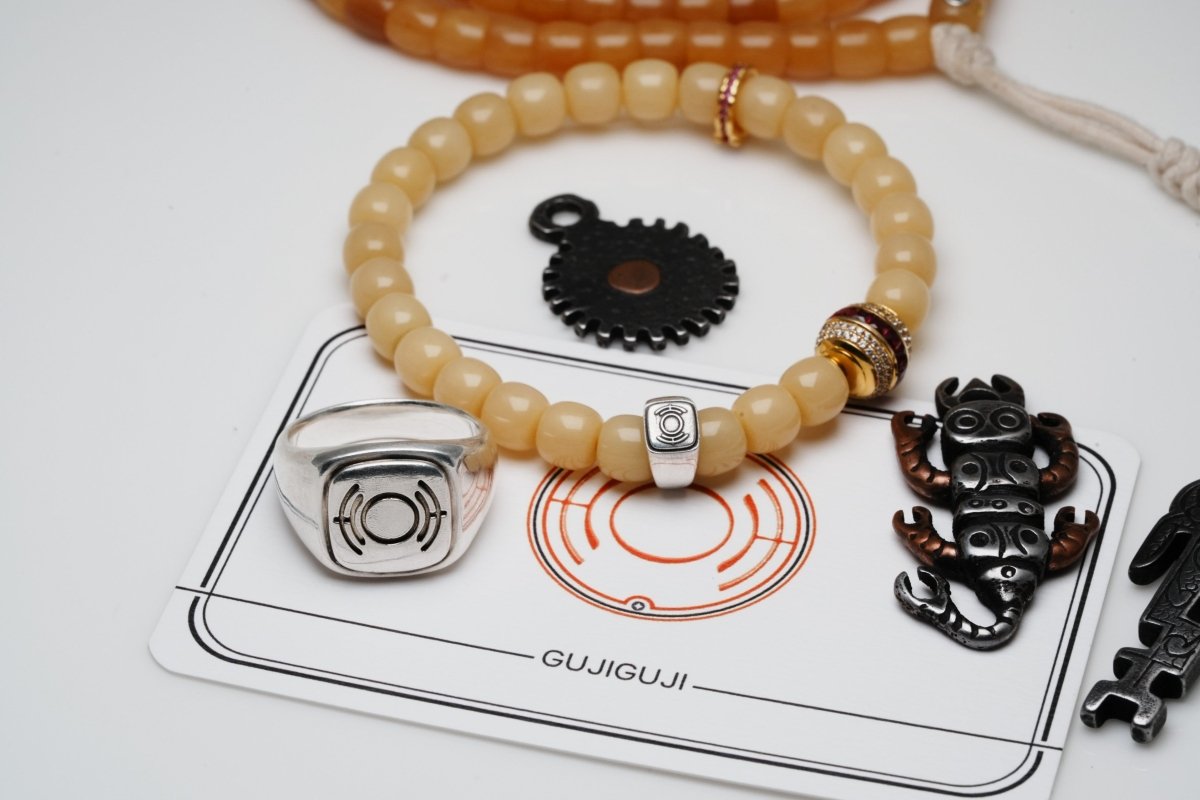
Camel Bone Art: Materials, Signs Of Age& How to Play
Camel Bone Art: Materials, Signs Of Age& How to Play
Camel Bone Art Pieces: A Complete Guide to Material, Meaning, and Aging Beauty
What Is “Wenwan”?
Culture you can hold in your hand.
“Wenwan” (文玩) refers to collectible objects designed for both appreciation and interaction. Historically, the term described refined desk objects used by scholars — brush rests, paperweights, ink droppers — items meant to cultivate focus and taste.
Today, Wenwan has evolved beyond the scholar’s studio. It includes bracelets, palm pieces, beads, and sculptural forms made from natural materials such as jade, wood, bamboo, stone, horn, and bone. These objects are not only decorative — they are meant to be handled, aged, and transformed by time.
The true value of Wenwan lies in three things:
- Touch — meant to be played, not stored away
- Time — changes through oxidation and patina
- Story — shaped by its owner’s daily interaction
Camel Bone Art: A Material Born of the Desert
Where Camel Bone Comes From
Camel bone art pieces are typically crafted from the leg bones of fully grown desert camels. Camels, often called “ships of the desert,” endure extreme heat, cold, and drought for decades. Their long lifespan — often over 40 years — results in bones that are exceptionally dense, fine-grained, and stable.
Importantly:
- Quality camel bone is sourced only from naturally deceased animals
- All materials are legally processed and ethically obtained
- No endangered species or banned materials are involved
In Tibetan Buddhist traditions, camel bone has long been used for prayer beads and ritual objects, believed to offer grounding energy and spiritual protection — adding a deeper cultural layer beyond aesthetics.
Why Camel Bone Is Ideal for Art Pieces
1. Natural Texture & Craftability
Camel bone naturally appears in warm ivory or pale honey tones. After polishing, it develops a soft, silky luster — smooth but not slippery. Its balance of hardness and flexibility allows it to be shaped into beads, palm pieces, or detailed carvings without becoming brittle.
2. Exceptional Aging Potential
Unlike many bone substitutes, camel bone responds beautifully to long-term handling. Over time, it undergoes a natural transformation:
- Oxidation
- Patina formation
- “Jade-like” translucency
This gradual change — from light ivory to amber, then deep honey or reddish-brown — is what collectors value most.
3. Accessible Yet Meaningful
Compared to prohibited or extremely expensive materials like ivory or horn, camel bone is:
- Ethically acceptable
- Beginner-friendly
- Rich in cultural symbolism
It offers a rare balance of affordability, tradition, and long-term collectibility.
How to Identify Quality Camel Bone (4 Key Points)
1. Color & Grain
Good camel bone shows:
- Soft ivory or pale yellow tones
- Subtle natural grain
- Small, evenly distributed pores (a natural feature)
Avoid pieces that look unnaturally white — these are often chemically bleached and prone to cracking.
2. Density & Weight
Camel bone feels noticeably heavier than cow bone of the same size. When gently tapped together:
- Camel bone sounds crisp and clear
- Lower-grade bones sound dull
3. Aged vs. Fresh Material
Aged camel bone (stored 3–5+ years before carving):
- Is more stable
- Ages more beautifully
- Cracks far less easily
Fresh bone tends to look chalky and dry.
4. Natural Imperfections
Tiny pores are normal.
Large holes, visible cracks, or uniform “plastic-like” surfaces are not.
The Beauty of Hand-Playing: How Camel Bone Evolves
What Changes Over Time?
Color
Ivory → Honey → Amber → Deep reddish-brown
Each piece ages differently — no two are ever the same.
Texture
Dry bone → Smooth patina → Jade-like softness
With time, the surface becomes glossy, dense, and almost translucent.
Value
A well-aged piece holds far more emotional and collectible value than a brand-new one.
How to Play & Care for Camel Bone Art
Early Stage (0–3 months)
- Use clean hands or cotton gloves
- 15–30 minutes daily
- Avoid sweat and moisture
Mid Stage (3–12 months)
- Clean, dry hands only
- Wipe gently after use
- Optional: very light olive oil once a month
Mature Stage (1 year+)
- Natural handling only
- Avoid water, heat, and direct sunlight
- Store in a breathable pouch when not in use
Final Thoughts
Camel Bone Art: Time You Can Feel
Camel bone art pieces are not about perfection out of the box.
They are about change, patience, and personal connection.
Each piece absorbs the rhythm of its owner’s life — slowly warming in color, smoothing in texture, and gaining a story that no factory finish can replicate.
Whether you are new to Wenwan or a long-time collector, camel bone offers a quiet, grounded beauty that grows with time — just like its owner.
Couldn't load pickup availability
Out of stock
View full details